Tetrate Agent Router Enterprise a LiteLLM Alternative for Production Agents
LiteLLM’s Python proxy bottlenecks as agents grow.
Agent Router is built on Envoy for high performance under load.

Tetrate Agent Router Enterprise vs. LiteLLM
 Technology Expertise
 Built on Envoy and Golang — the same distributed systems stack powering production infrastructure at scale. Designed for enterprise delivery, not prototyping.
Python-based library and proxy server optimized for developer experimentation. Best suited for teams prototyping, not running production workloads at scale.
 Enterprise Admin Focus
 Purpose-built for enterprise operators: dedicated admin UX, immutable audit logs for EU AI Act compliance, and governance controls designed for regulated industries — not retrofitted from an OSS project.
Community-driven feature roadmap prioritizes GitHub star breadth over enterprise depth. Admin UX is developer-first; enterprise governance features require significant custom configuration.
 MCP Maturity
 Production-ready MCP Gateway with a curated server catalog, MCP Profiles for bundling tool sets, OAuth and API key authentication, and unified metrics and observability — all available today.
MCP support is experimental. Not recommended for teams that need stable, auditable tool access in production agent workflows.
 Production Readiness
 Proven track record operating critical infrastructure in regulated industries, including CVE remediation, compliance audits, and SEV0 incident response. Built by the team that co-created Agent Router, formerly Envoy AI Gateway.
Self-hosted Python proxy with no enterprise SLAs, no published audit trail capabilities, and limited third-party validation for supply chain or operational readiness in regulated environments.
Security Record Built on Envoy, which has faced the open internet since 2016 and has a public security process. Tetrate runs and patches the management plane. Data planes connect out to Tetrate, and nothing connects in.
Two security events in 2026: malware in two PyPI releases in March, and two CVEs disclosed in October that allowed gateway takeover and API key theft. LiteLLM fixed both CVEs in version 1.83.9. Your team must patch every LiteLLM copy.
Facing These Questions?

Are you seeing latency spikes above a few hundred RPS?

Do you need to restart your gateway regularly?

Are your rate limits reliable under concurrency?

Is logging affecting performance?
Do you know which LiteLLM version every team runs?
If yes, then you need an enterprise grade gateway
Technical Differentiation
LiteLLM
LiteLLM begins to bottleneck beyond ~300 RPS. In documented cases, latency degraded from 200 ms to over 12 seconds under load, and adding more instances did not resolve the issue.
Tetrate Agent Router
Built on the Envoy proxy, Tetrate Agent Router is proven at high throughput in production, handling significantly higher RPS with consistent performance.
See published benchmarks for sourced sustained-load figures and methodology.
LiteLLM
Under sustained traffic, LiteLLM containers can grow to 12 GB and crash. Teams end up relying on scheduled restarts every 6 to 8 hours just to keep the gateway healthy.
Tetrate Agent Router
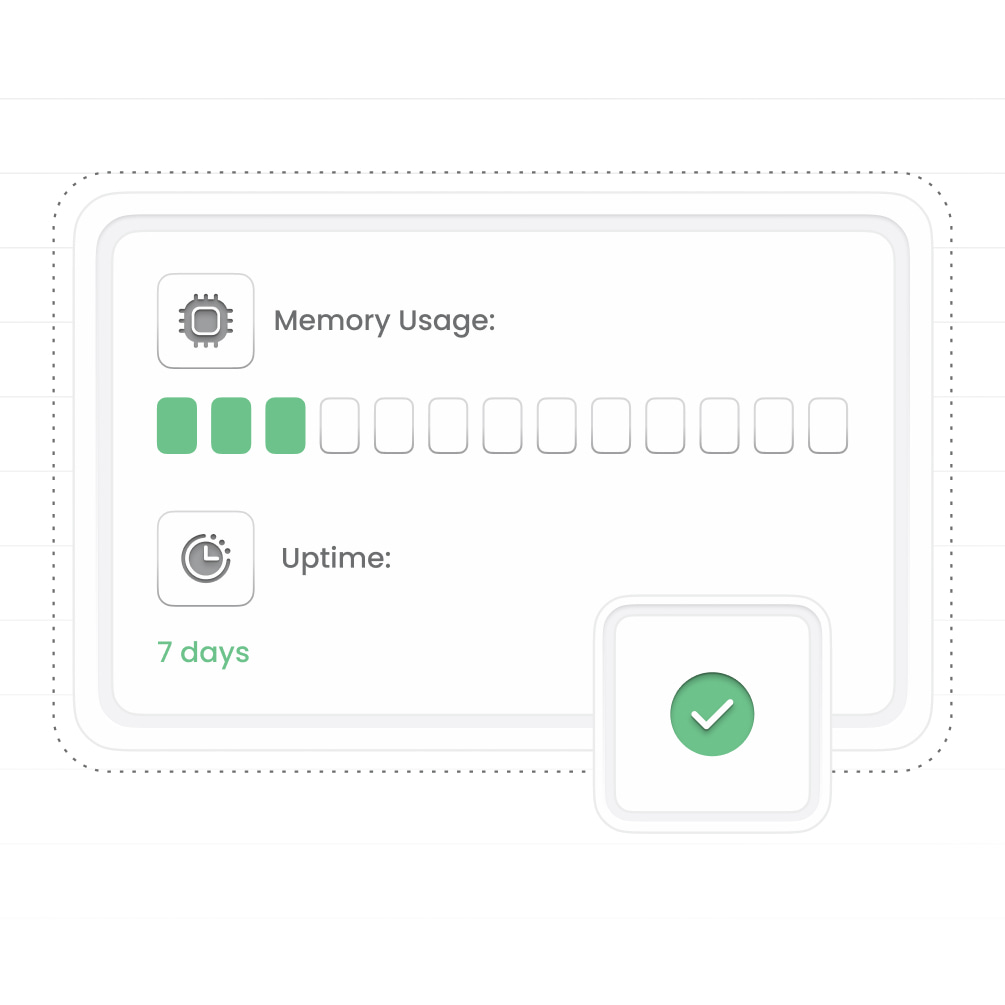
Agent Router improves runtime stability for long-lived deployments, reducing forced restarts, OOM events, and performance drift over time. Envoy gives Agent Router a more deterministic memory profile.
LiteLLM
Performance can degrade once log volume grows large, with latency rising as operational history accumulates.
Tetrate Agent Router
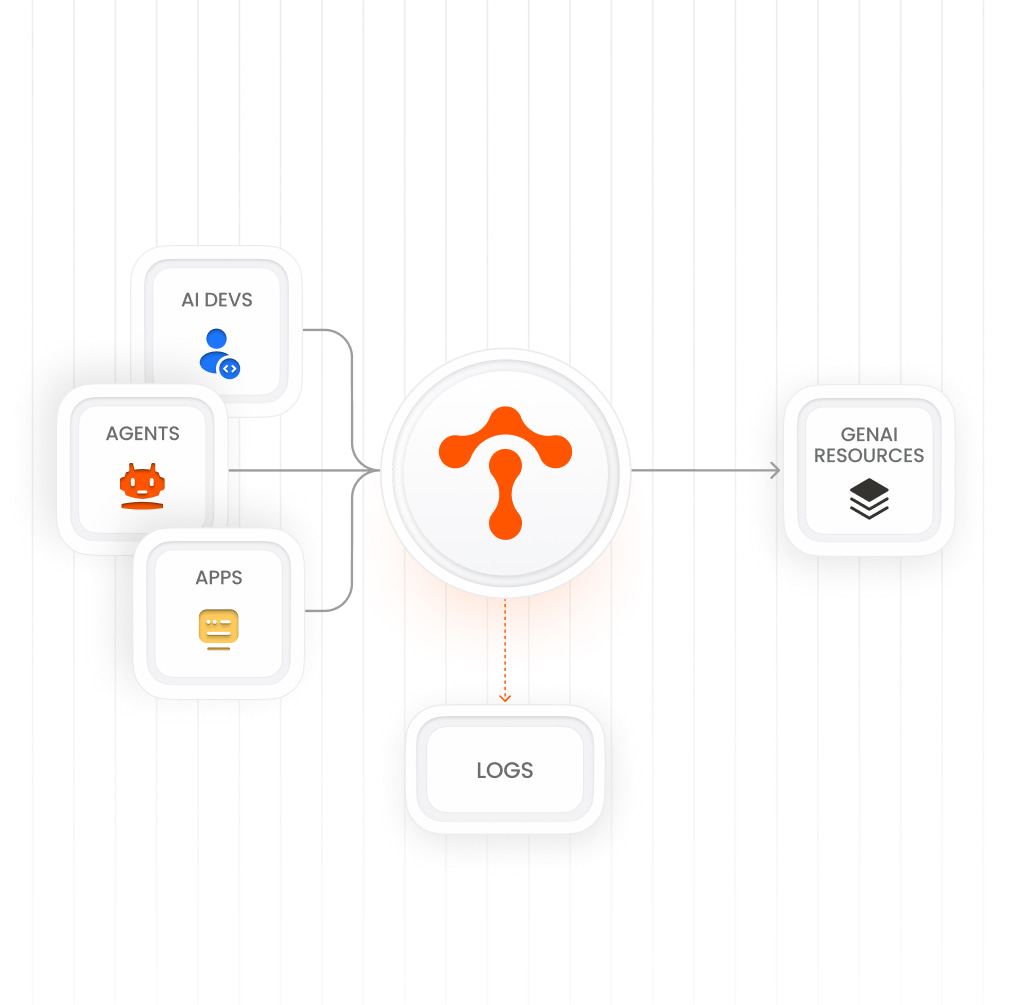
Logging stays off the critical path. Logs are written asynchronously, while policies and pricing remain cached in memory so requests do not wait on database calls.
LiteLLM
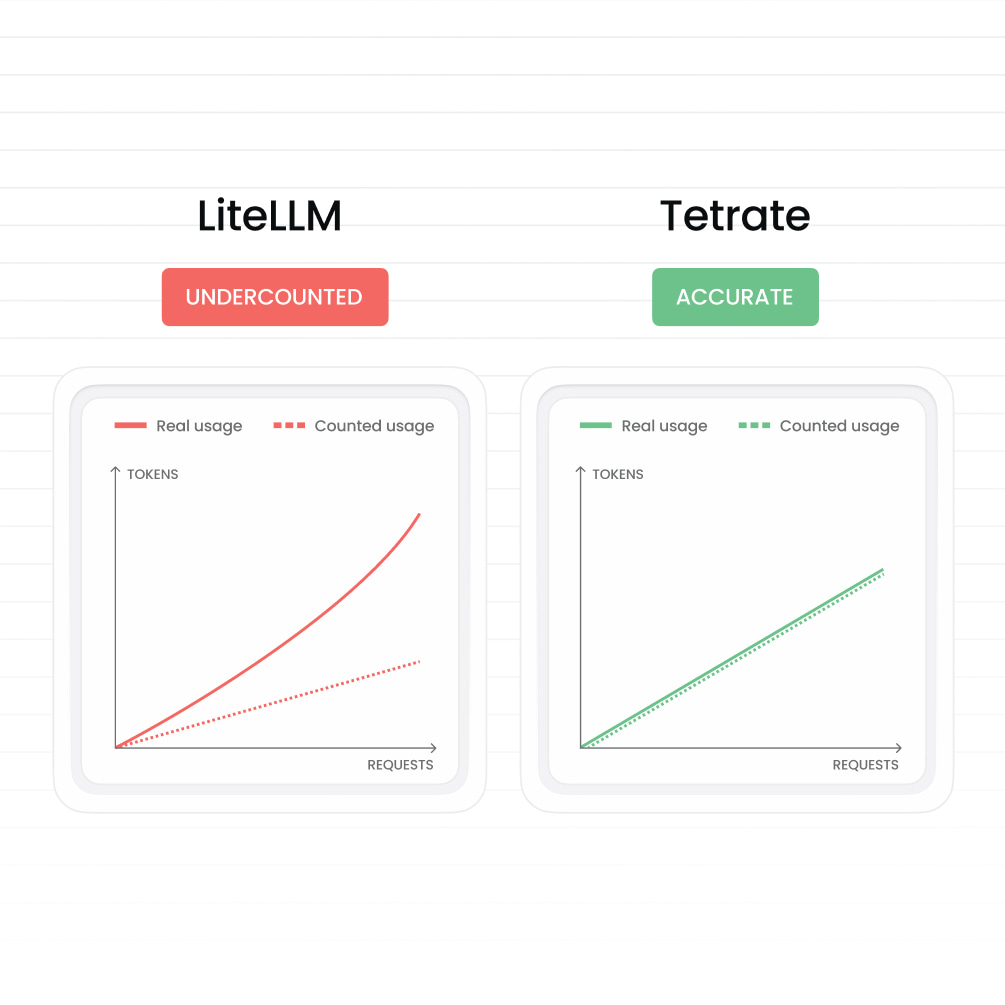
Usage is counted after the call completes, so concurrent requests can exceed limits before records catch up.
Tetrate Agent Router
Limits and budgets are enforced before execution. Token reservations happen atomically, so teams can trust controls even under concurrency.
LiteLLM
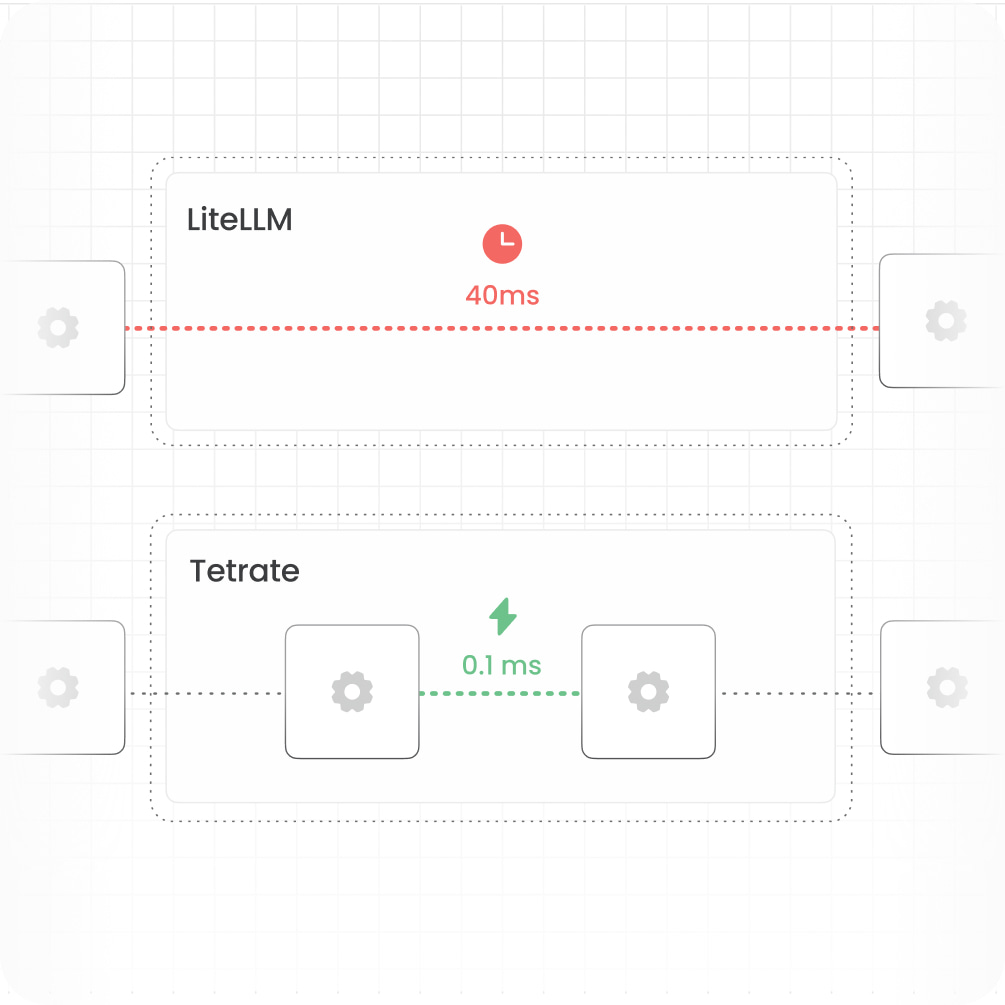
Per-request overhead can add meaningful latency, especially in agent loops and multi-step workflows where delays stack up.
Tetrate Agent Router
The request path stays lean, with near-zero added latency, so multi-step agent workflows remain fast and responsive.

Frequently asked questions about moving from LiteLLM
Versions before 1.83.9 are not safe: they include CVE-2026-35029 and CVE-2026-59823. Even after you patch, every LiteLLM copy still needs its own updates, keys, and database. See LiteLLM's 2026 security incidents.
Apps keep their OpenAI-compatible API. Each app changes two settings: the base URL and the key. Teams move one at a time while LiteLLM keeps running. See the step-by-step LiteLLM migration guide.
Yes. Data planes run in your own AWS, Azure, or Google Cloud VPC, or on-premises. Tetrate runs the management plane. Each data plane connects out to Tetrate, and nothing connects in.
Compare other gateways
See how Tetrate Agent Router compares across the enterprise AI gateway landscape.

